Learne2i
Learne2i Guess Paper solutions
JEE Main 2026 / Session 1
All chapters

Chemistry

Equilibrium

Question 26 / MCQ
Question 26
For the reaction, 2SO2(g)+O2(g)⇌2SO3(g), ΔH=−57.2 kJ mol−1 and Kc=1.7×10¹⁶. Which of the following statement is INCORRECT?
A.
The equilibrium constant is large suggestive of reaction going to completion and so no catalyst is required.
B.
The addition of inert gas at constant volume will not affect the equilibrium constant.
C.
The equilibrium will shift in forward direction as the pressure increases.
D.
The equilibrium constant decreases as the temperature increases.
Correct answer: A

Source solution

Sol. 2SO2(g)+O2(g)⇌2SO3(g) Kc=1.7×10¹⁶ i.e. reaction goes to completion. Equilibrium constant has no relation with catalyst. Catalyst only affects the rate with which a reaction proceeds. For the given reaction, catalyst V2O5 is used to speed up the reaction (Contact process).
Question 27 / MCQ
Question 27
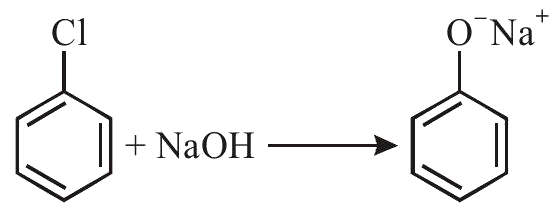
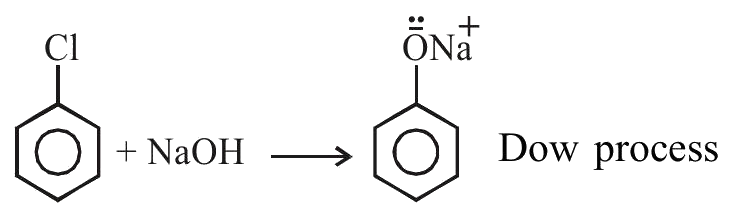
The above reaction requires which of the following reaction conditions?Question figure
A.
573 K,Cu,300 atm
B.
623 K,Cu,300 atm
C.
573 K,300 atm
D.
623 K,300 atm
Correct answer: D

Source solution

Sol. Temperature =623 K Pressure =300 atmQuestion figure
Question 28 / Numerical
Question 28
When 5.1 g of solid NH4HS is introduced into a two litre evacuated flask at 27∘C,20% of the solid decomposes into gaseous ammonia and hydrogen sulphide. The Kp for the reaction at 27∘C is x×10−2. The value of x is . (Integer answer) [Given R=0.082 L atm K−1 mol−1 ]
Numerical answer: ____________________
Enter the requested integer (0 decimal places).
Correct answer: 6

Source solution

moles of NH4HS initially taken =5.1 g51 g/mol =0.1 mol volume of vessel =2ℓ
NH4HS(s)⇌NH3( g)+H2 S(g)
t=00.1 mol
t=∞0.1(1−0.2)0.1×0.20.1×0.2
⇒ partial pressure of each component P=nRTV=0.1×0.2×0.082×3002 =0.246 atm ⇒kP=PNH3×PH2 S=(0.246)2=0.060516 =6.05×10⁻² ⇒6
Question 29 / MCQ
Question 29
At −20∘C and 1 atm pressure, a cylinder is filled with equal number of H2.I2 and HI molecules for the reaction H2( g)+I2( g)⇌2HI(g), the KP for the process is x×10−1. x= ......... . [Given : R=0.082 L atm K−1 mol−1 ]
A.
2
B.
1
C.
10
D.
0.01
Correct answer: C

Source solution

Sol. Δng=0 Kp=(nHI)2nH2nI2(PTnT)Δng nHI=nH2=nI2 so KP=1 1=x×10−1 x=10
Question 30 / Numerical
Question 30
The OH−concentration in a mixture of 5.0 mL of 0.0504MNH4Cl and 2 mL of 0.0210MNH3 solution is x×10−6M. The value of x is . (Nearest integer) [Given Kw=1×10⁻¹⁴ and Kb=1.8×10⁻⁵ ]
Numerical answer: ____________________
Enter the requested integer (0 decimal places).
Correct answer: 3

Source solution

[NH4+]=0.0504&[NH3]=0.0210 So Kb=[NH4+][HO−][NH3] [HO−]=Kb×[NH3][NH4+]=1.8×10−5×25×210504 =3×10⁻⁶
Question 31 / Numerical
Question 31
The equilibrium constant Kc at 298 K for the reaction A+B⇌C+D is 100 . Starting with an equimolar solution with concentrations of A,B,C and D all equal to 1 M , the equilibrium concentration of D is ×10−2 M. (Nearest integer)
Numerical answer: ____________________
Enter the requested value (an integer; 0 decimal places). Use the units and scaling stated in the question.
Correct answer: 182

Source solution

A+B⇌C+D:Keq=100 1M1M1M1M First check direction of reversible reaction. Since QC=[C][D][A][B]=1<Keq .⇒ reaction will move in forward direction to attain equilibrium state. ⇒A+B⇌C+D:Keq=100  to 1111 teq. 1−x1−x1+x1+x Now : Keq=100=(1+x)(1+x)(1−x)(1−x) ⇒100=(1+x1−x)2 (i) 10=(1+x1−x) ⇒10−10x=1+x ⇒11x=9 ⇒x=911 (ii) −10=1+x1−x ⇒−10+10x=1+x ⇒−9x=−11 ⇒x=119 →′x′ cannot be more than one, therefore not valid. therefore equation concretion of (D) =1+x =1+911=2011=1.8181=181.81×10⁻²≃182×10−2
Question 32 / MCQ
Question 32
Match List I with List II
LIST ILIST II
A.ChlorophyllI.Na2CO3
B.Soda ashII.CaSO4
C.Dentistry, Ornamental workIII.Mg2+
D.Used in white washingIV.Ca(OH)2
Choose the correct answer from the options given below:
A.
A-II, B-I, C-III, D-IV
B.
A-III, B-I, C-II, D-IV
C.
A-II, B-III, C-IV, D-I
D.
A-III, B-IV, C-I, D-II
Correct answer: B

Source solution

Chlrophyl →Mg2+ Sodaash →Na2CO3 Destistry & ornamental work →CaSO4 White washing →Ca(OH)2
Question 33 / MCQ
Question 33
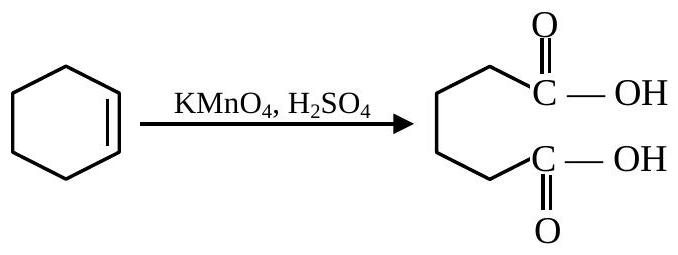
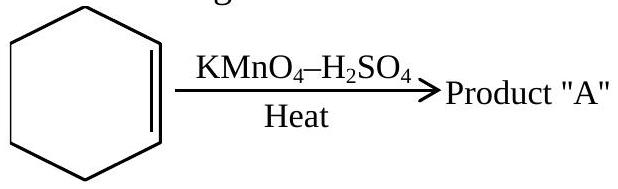
Consider the given chemical reaction : Question figure Product " A " is :
A.
picric acid
B.
oxalic acid
C.
acetic acid
D.
adipic acid
Correct answer: D

Source solution

Question figure
Question 34 / Numerical
Question 34
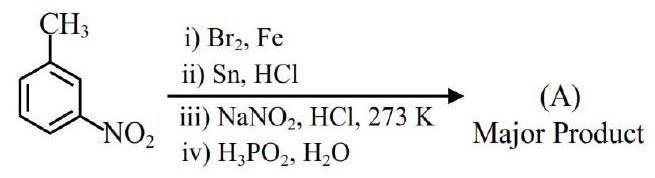
Consider the following sequence of reactions to produce major product (A) Question figure Molar mass of product (A) is gmol−1. (Given molar mass in gmol−1 of C:12,H:1, O:16,Br:80, N:14,P:31 )
Numerical answer: ____________________
Enter the requested value (an integer; 0 decimal places). Use the units and scaling stated in the question.
Correct answer: 171

Source solution

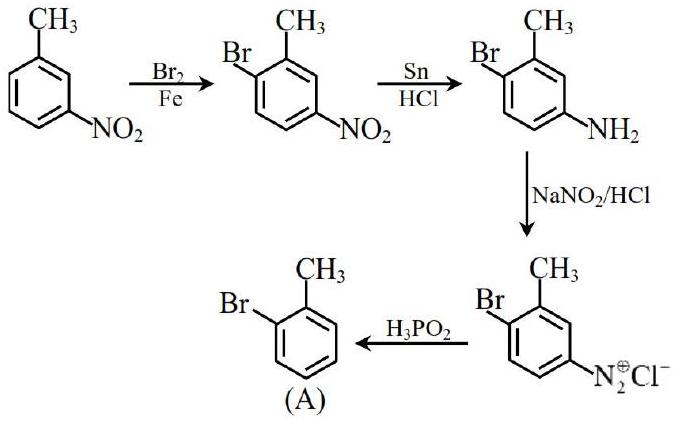
(171) Question figure Molar mass of product (C7H7Br)(A) is 171 g mol−1
Question 35 / Numerical
Question 35
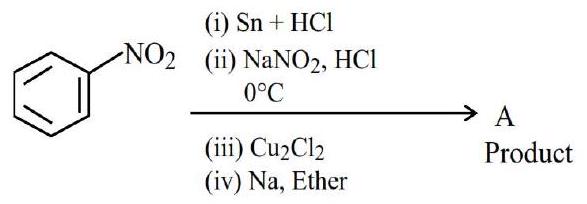
Consider the following sequence of reactions : Question figure Molar mass of the product formed (A) is gmol−1.
Numerical answer: ____________________
Enter the requested value (an integer; 0 decimal places). Use the units and scaling stated in the question.
Correct answer: 154

Source solution
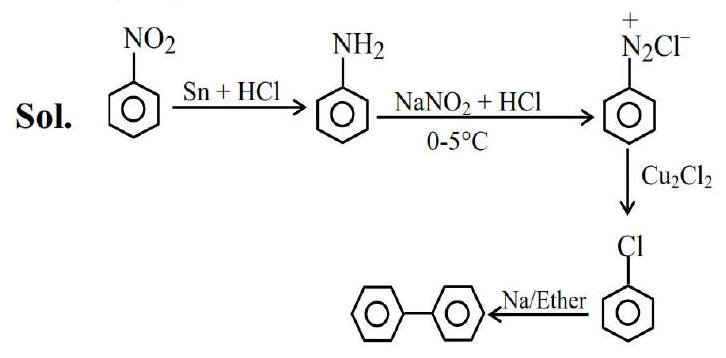
Question figure
Question 36 / MCQ
Question 36
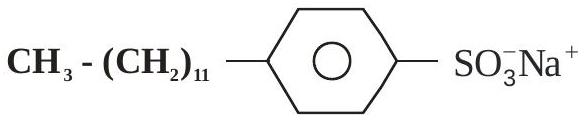
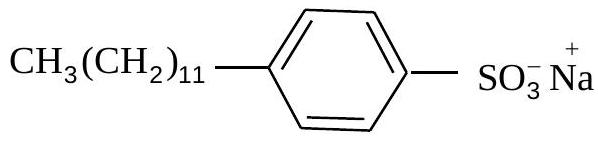
Match List-I with List-II List-I (A) Question figure Br− (B) Question figure (C) C17H35COO−Na++Na2CO3+ Rosinate (D) CH3(CH2)16COO(CH2CH2O)nCH2CH2OH List-II (I) Dishwashing powder (II) Toothpaste (III) Laundry soap (IV) Hair conditioner
A.
- (III), (B) - (II), (C) - (IV), (D) - (I)
B.
(A) - (IV), (B) - (II), (C) - (III), (D) - (I)
C.
(A) - (IV), (B) - (III), (C) - (II), (D) - (I)
D.
(A) - (III), (B) - (IV), (C) - (I), (D) - (II)
Correct answer: B

Source solution

(A) [CH3(CH2)15−N(CH3)3]+Br− is cationic detergents used in hair conditioner (B) Question figure Is anionic detergent used in tooth pastes (C) C17H35COO−Na++Na2CO3+ Rosinate is used as laundary soap (D) CH3(CH2)16COO(CH2CH2O)NCH2CH2OH is non-ionic detergents formed from stearic acid and poly ethylene glycol used as liquid dishwashing detergents
Question 37 / MCQ
Question 37
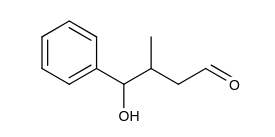
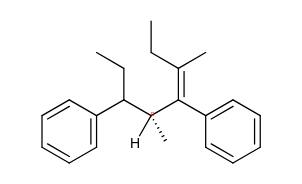
The major product formed in the following reaction is: Question figure (A) Question figure (B) Question figure (C) Question figure (D) Question figure Choose the correct answer from the options given below:

A.
A only
B.
B only
C.
C only
D.
D only
Correct answer: B

Source solution

Solution : Question figure Question figure
Question 38 / MCQ
Question 38
Match List-I with List-II : List-I Name of oxo acid (a) Hypophosphorous acid (b) Orthophosphoric acid (c) Hypophosphoric acid (d) Orthophosphorous acid given below :
A.
(a)-(v), (b)-(i), (c)-(ii), (d)-(iii)
B.
(a)-(iv), (b)-(i), (c)-(ii), (d)-(iii)
C.
(a)-(iv), (b)-(v), (c)-(ii), (d)-(iii)
D.
(a)-(v), (b)-(iv), (c)-(ii), (d)-(iii)
Correct answer: A

Source solution

(iv) +2 (v) +1 Choose the correct answer from the options List-II Oxidation state of 'P' (i) +5 (ii) +4 (iii) +3 (iii) +3 (iv) +2 +1 from the options s Sol. (a) Hypophosphorus acid : H3PO2 (+1)3+x+(−2)2=0x=+1 (b) Orthophosphoric acid : H3PO4 (+1)3+x+(−2)4=0x=+5 (c) Hypophosphoric acid : H4P2O6 (+1)4+2x+(−2)6=0x=+4 (d) Orthophosphorous acid : H3PO3 (+1)3+x+(−2)3=0x=+3
Question 39 / MCQ
Question 39
Match List-I with List-II.
List-I (Oxide)List-II (Nature)
(A)Cl2O7(I)Amphoteric
(B)Na2O(II)Basic
(C)Al2O3(III)Neutral
(D)N2O(IV)Acidic
Choose the correct answer from the options given below:
A.
- (IV), (B) - (III), (C) - (I), (D) - (II)
B.
(A) - (IV), (B) - (II), (C) - (I), (D) - (III)
C.
(A) - (II), (B) - (IV), (C) - (III), (D) - (I)
D.
(A) - (I), (B) - (II), (C) - (IIII), (D) - (IV)
Correct answer: B

Source solution

Cl2O7 Acidic Na2O Basic Al2O3 Amphoteric N2O Neutral
Question 40 / MCQ
Question 40
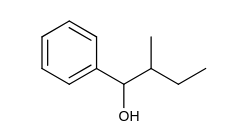
Find the final major product of the following reactions? Question figure

A.
Question figure
B.
Question figure
C.
Question figure
D.
Question figure
Correct answer: A

Source solution

Solution: Question figure
Choose another chapter