Learne2i
Learne2i Priority Practice solutions
JEE Main 2026 / Session 1
All chapters

Chemistry

Some Basic Concepts of Chemistry

Question 1 / Numerical
Question 1
A solution containing 2 g of a non-volatile solute in 20 g of water boils at 373.52 K . The molecular mass of the solute is gmol−1. (Nearest integer) Given, water boils at 373 K, Kb for water =0.52 K kg mol−1
Numerical answer: ____________________
Enter the requested value (an integer; 0 decimal places). Use the units and scaling stated in the question.
Correct answer: 100

Source solution

100 ΔTb=373.52−373=0.52 ΔTb=iKbmi=1 0.52=0.52×2/x20×1000 x=100gm/mol
Question 2 / Numerical
Question 2
The molarity of the solution prepared by dissolving 6.3 g of oxalic acid (H2C2O4⋅2H2O) in 250 mL of water in molL−1 is x×10−2. The value of x is . (Nearest integer) [Atomic mass : H:1.0,C:12.0,O:16.0 ]
Numerical answer: ____________________
Enter the requested integer (0 decimal places).
Correct answer: 20

Source solution

[H2C2O4⋅2H2O]= weight /MwV(L) ⇒x×10−2=6.3/126250/1000 x=20
Question 3 / Numerical
Question 3
Quantitative analysis of an organic compound (X) shows following % composition. C : 14.5% Cl : 64.46% H : 1.8% (Empirical formula mass of the compound (X) is ×10−1 (Given molar mass in gmol−1 of C:12,H:1, O:16,Cl:35.5 )
Numerical answer: ____________________
Enter the requested value (an integer; 0 decimal places). Use the units and scaling stated in the question.
Correct answer: 1655

Source solution

C:Cl:H:O  \%mass 14.564.461.819.24  Molar ratio 14.51264.4635.51.8119.24161.21.81.81.2 Minimum 2332 integral ratio Empiricial formula =C2H3Cl3O2 Mass =165.5 Mass =1655×10−1
Question 4 / MCQ
Question 4
Match List I with List II
LIST I (molecules/ions)LIST II (No. of lone pairs of e−on central atom)
A.IF7I.Three
B.ICl4−II.One
C.XeF6III.Two
D.XeF2IV.Zero
Choose the correct answer from the options given below:
A.
A - II, B - III, C - IV, D - I
B.
A - II, B - I, C - IV, D - III
C.
A - IV, B - I, C - II, D - III
D.
A - IV, B - III, C - II, D - I
Correct answer: D

Source solution

Molecule IF7 \href{http://l.pe}{l.pe} −of C.M. ICl4− O XeF6 2 XeF2 1 3
Question 5 / Numerical
Question 5
Number of molecules having bond order 2 from the following molecule is . C2,O2,Be2,Li2,Ne2, N2,He2
Numerical answer: ____________________
Enter the requested value (an integer; 0 decimal places). Use the units and scaling stated in the question.
Correct answer: 2

Source solution

C2 (12e−):σ1 s2,σ∗1 s2,σ2 s2,σ∗2 s2[π2px2=π2py2] B.O. =8−42=2 O2 (16e−):σ1 s2,σ∗1 s2,σ2 s2,σ∗2 s2,σ2pz2 [π2px2=π2py2][π∗2px1=π∗2py1] B.O. =10−62=2 Be2 ( 8e−): σ1 s2,σ∗1 s2,σ2 s2,σ∗2 s2 B.O. =4−42=0 Li2 (6e−):σ1 s2,σ∗1 s2,σ2 s2 B.O. =4−22=1 Ne2 (20e−):σ1 s2,σ∗1 s2,σ2 s2,σ∗2 s2,σ2pz2 [π2px2=π2py2][π∗2px2=π∗2py2]σ∗2pz2 B.O. =10−102=0 N2 (14e−):σ1 s2,σ∗1 s2,σ2 s2,σ∗2 s2[π2px2=π2py2]σ2pz2 B.O. =10−42=6 He2 (4e−):σ1 s2,σ∗1 s2 B.O. 2−22=0
Question 6 / Numerical
Question 6
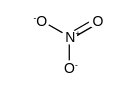
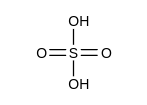
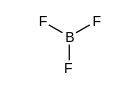
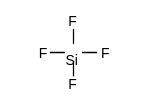
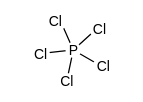
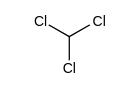
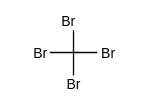
Number of molecules from the following which are exceptions to octet rule is . CO2,NO2,H2SO4,BF3,CH4,SiF4,ClO2,PCl5, BeF2,C2H6,CHCl3,CBr4
Numerical answer: ____________________
Enter the requested value (an integer; 0 decimal places). Use the units and scaling stated in the question.
Correct answer: 6

Source solution
Question figure Question figure Question figure Question figure exception to octet rule Question figure Question figure Question figure Question figure exception exception to F−Be−F to octet rule octet rule exception to octet rule Question figure complete octet Question figure complete octet Question figure complete octet
Question 7 / MCQ
Question 7
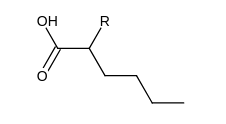
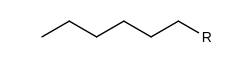
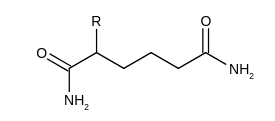
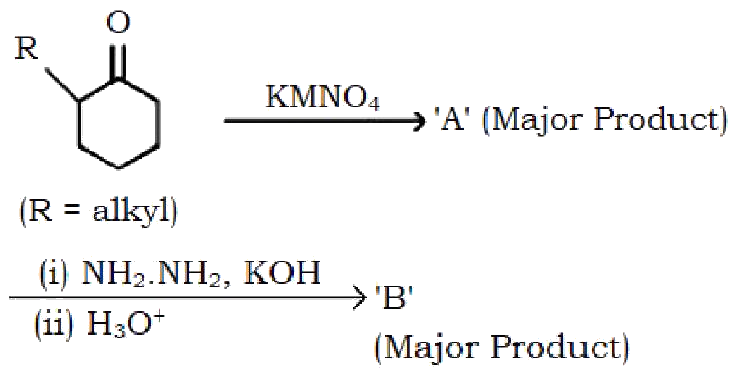
A' and 'B' in the below reactions are :Question figure
A.
=A, B=Question figure
B.
=A, B=Question figure
C.
B=Question figure
D.
= A, B=Question figure
Correct answer: D

Source solution

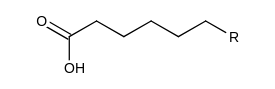
\textbf{Solution:} The given compound is a cyclohexanone having an alkyl substituent R. Cyclohexanone→HotKMnO4A Hot alkaline KMnO4 oxidatively cleaves the cyclic ketone ring to give the corresponding open-chain carboxylic acid. Hence, A is HOOC−(CH2)4−R Now, A→(ii) H3O+(i) NH2NH2, KOHB The reagent NH2NH2/KOH (Wolff–Kishner reduction) reduces only aldehyde or ketone carbonyl groups to −CH2−. Since A contains a carboxylic acid group and no aldehyde/ketone group, it remains unchanged under these conditions. Therefore, B=A=HOOC−(CH2)4−R Hence, the correct option is (4)
Question 8 / MCQ
Question 8
Match List-I with List-II :
List-I (Species) List-II (Maximum allowed concentration in ppm in drinking water)
A.F−I.<50ppm
B.SO42−II.<5ppm
C.NO3−III.<2ppm
D.ZnIV.<500ppm
A.
A-II, B-I, C-III, D-IV
B.
A-IV, B-III, C-II, D-I
C.
A-I, B-II, C-III, D-IV
D.
A-III, B-II, C-I, D-IV
Correct answer: D

Source solution

Correct answer A-III, B-IV, C-I, D-II
Choose another chapter