
Chemistry
Biomolecules
Question 275 / MCQ
Match List-I with List-II.
Choose the correct answer from the options given below:
| List-I Reaction | List-II Catalyst | ||
| (A) | (I) | NO(g) | |
| (B) | (II) | ||
| (C) | (III) | Pt(s) | |
| (D) | (IV) | Fe(s) |
Correct answer: C
Source solution
(a)Question 276 / MCQ
The correct match between item 'I' and item 'II' is :
(A) Lysine
(P) 1-naphthol
(B) Furfural
(Q) ninhydrin
(C) Benzyl alcohol
(R)
| Item 'I' | Item 'II' (compound) | (reagent) |
Correct answer: A
The source provides a brief answer only. A detailed worked solution is not available for this question.
Source solution
Question 277 / MCQ
Match List I with List II}
Choose the correct answer from the options given below:
| List I Enzymatic reaction | List II Enzyme | ||
| A | Sucrose | I. | Zymase |
| B | Glucose | II. | Pepsin |
| C | Starch | III. | Invertase |
| D | Proteins | IV. | Diastase |
Correct answer: C
The source provides a brief answer only. A detailed worked solution is not available for this question.
Source solution
Sol. FactualQuestion 278 / MCQ
Match List I with List II
Choose the correct answer from the options given below:
| LIST I | LIST II | ||
| A. | I. | Functional isomers | |
| B. | II. | Homologous | |
| C. | III. | Anomers | |
| D. | IV. | Epimers |
Correct answer: C
Source solution
Sol. Based on biomolecules theory and structure of these named compounds - (A)Question 279 / MCQ
Match List I with List II.
Choose the most appropriate answer from the options given below :
| List I Enzyme |
|
| A. Invertase | I. Starch into maltose |
| B. Zymase | II. Maltose into glucose |
| C. Diastase | III. Glucose into ethanol |
| D. Maltase | IV. Cane sugar into glucose |
Correct answer: C
Source solution
Sol. Invertase : Cane sugarQuestion 280 / MCQ
Match List I with List II
Choose the correct answer from the options given below:
| LIST-I | LIST-II | ||
| A. | Glucose/NaHCO | I. | Gluconic acid |
| B. | Glucose/ | II. | No reaction |
| C. | Glucose/HI/ | III. | n-hexane |
| D. | Glucose/Bromine water] | IV. | Saccharic acid |
Correct answer: B
Source solution
Sol. GlucoseQuestion 281 / MCQ
Match List I with List II
Choose the correct answer from the options given below :-
| List I Bio Polymer) | List II (Monomer) | ||
| A. | Starch | I. | nucleotide |
| B. | Cellulose | II. | |
| C. | Nucleic acid | III. | |
| D. | Protein | IV. | |
Correct answer: D
Source solution
Sol. A-II, B-III, C-I, D-IV Fact based.Question 282 / MCQ
Identify the correct statement among the following:
Correct answer: D
Source solution
Sol. Isoleucine has 2 chiral centre Glycine is optically inactive Aspartic acid also contain COOH group at the side chain. Cysteine easily dimmerise due to free SH groupQuestion 283 / MCQ
The correct statement among the following is :
Correct answer: A
Source solution
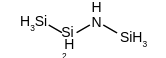
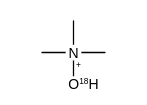 Trisilylamine is planar, due to backbonding of lone pairs of nitrogen into vacant d-orbitals of Si . In trimethylamine, there is no such delocalisation and hence it is more basic.
Question 284 / MCQ
Identify the incorrect statement from the following
Correct answer: A
Source solution
Amylose is a linear chain polymer ofQuestion 285 / MCQ
Match List - I with List - II.
List - I
(Carbohydrate)}
List - II
(Linkage}
Source)}
(A) Amylose
(B) Cellulose
(C) Glycogen
(D) Amylopectin
(I)
Correct answer: B